The drums of war are beating louder than they have in decades. Across the globe, from the halls of power in Washington D.C. to the bustling streets of Tehran, the question on everyone’s lips is the same: Are we on the verge of a catastrophic direct conflict, or can diplomacy finally prevail?
As of February 2026, the geopolitical landscape is shifting beneath our feet. For years, the United States and Iran have engaged in a high-stakes game of brinkmanship—a “shadow war” fought through proxies, cyber-attacks, and economic sanctions. However, the recent escalation in naval movements in the Persian Gulf and the heightening of nuclear enrichment activities have brought the two nations to a terrifying crossroads.
The Current State of Affairs The Omani Backchannel
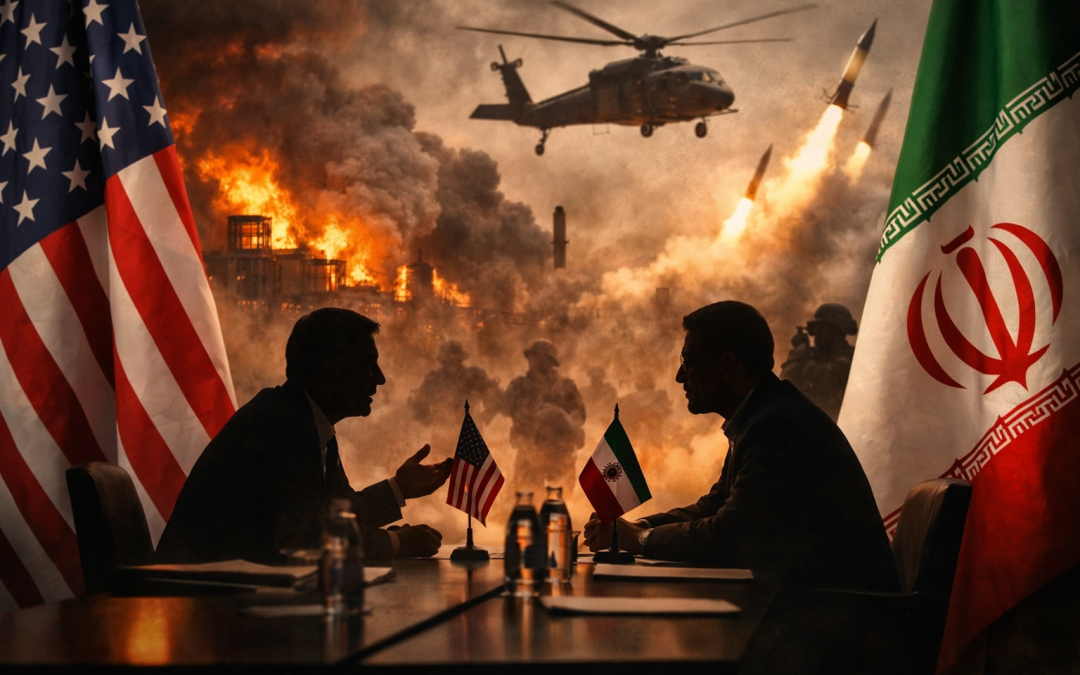
Recent reports confirm that high-level, albeit indirect, talks are currently underway in Muscat, Oman. These discussions are happening against a backdrop of extreme distrust. The Biden-Harris administration (and the subsequent shifting political tides in the US) has struggled to balance the pressure from hawks at home with the reality that a direct military confrontation with Iran would be a disaster for global energy markets and regional stability.
The “Oman Channel” has historically been the place where the impossible becomes possible. Yet, the stakes in 2026 are different. Iran has significantly advanced its centrifuge technology, and the U.S. remains entrenched in its policy of “maximum pressure” through sanctions. The primary goal of these talks is “de-escalation”—a word that sounds hopeful but often masks a fragile status quo.
Why Direct Conflict is a Looming Shadow
The fear of direct conflict isn’t just hyperbole. We are seeing a convergence of “Flashpoints”:
- Maritime Security: The Strait of Hormuz remains a choke point where a single misunderstood maneuver by a drone or a patrol boat could trigger a full-scale naval engagement.
- The Nuclear Threshold: Iran is closer than ever to “breakout capacity.” For the U.S. and its allies, this is a red line that often triggers talk of “surgical strikes.”
- The Proxy Paradox: From Lebanon to Yemen, the actions of non-state actors often drag their sponsors into conflicts they didn’t explicitly authorize.
A Philosophical Shift: Beyond the Headlines
To truly understand the US-Iran dynamic, we must look beyond the daily news cycle. We must ask: Why is conflict the default setting for Western foreign policy? In my book, “A Realistic Path to Peace,” I explore this very dilemma. The current standoff with Iran is not an isolated incident; it is a symptom of a long-standing imperialist framework that views any nation seeking sovereignty as a threat. When we look at the U.S. approach to Iran, we see mirrors of the same aggressive posturing used against China and Russia.
True peace isn’t just the absence of falling bombs; it is the presence of mutual respect and the dismantling of the “hegemony” mindset. As I discuss in the book, a “realistic” path involves acknowledging the legitimate security concerns of other nations rather than demanding total submission. If the U.S. wants to avoid a direct conflict with Iran, it must stop viewing diplomacy as a tool for regime change and start viewing it as a bridge for coexistence.
The Human Cost of Imperialism
Those of us who have lived through the eras of the Vietnam War and the interventions in Central America know that the rhetoric of “protecting democracy” often leads to the destruction of lives. In my memoir, “My Whirlwind Lives,” I reflect on my journey through these tumultuous times—from the draft resistance during the Vietnam era to working with the Sandinistas in Nicaragua.
These experiences taught me a vital lesson: the “enemy” is rarely the people of another nation; the enemy is the military-industrial complex that profits from perpetual war. When we talk about “direct conflict” with Iran, we aren’t just talking about maps and missiles. We are talking about the lives of young soldiers, the starvation of civilians through sanctions, and the displacement of millions.
In “My Whirlwind Lives,” I recount how the US support for apartheid in South Africa or its interventions in Latin America ultimately failed because they lacked moral standing. The same applies here. A war with Iran would be a war of choice, not necessity.
The Role of Media and Misinformation
One of the biggest hurdles to peace is how the narrative is framed. Mainstream media often portrays Iran as a monolithic “bad actor” without context. On this blog, we strive to peel back those layers. Whether it’s discussing the Gaza Famine and the blockade or analyzing the Peace Delegates’ reports from China, the goal is always the same: to show that there is another side to the story.
If we are to prevent a war with Iran, the American public must demand better information. We must recognize that the same voices that pushed for the Iraq War are often the ones calling for “toughness” against Tehran today.
Can the “Oman Talks” Succeed?
For the current talks to succeed, three things must happen:
- Sanctions Relief: You cannot negotiate with a gun to someone’s head. Real diplomacy requires the easing of economic warfare that targets the Iranian working class.
- Regional Inclusion: Peace cannot be brokered by the U.S. and Iran alone. Regional players must be part of a broader security architecture.
- A Shift in US Strategy: The U.S. must move away from the “exceptionalism” that I critique in my writings and towards a multipolar world where different systems of government can exist without being under constant threat of subversion.
The Path Forward: Advocacy for Meaningful Change
As an advocate for meaningful change, I believe our role is to keep the pressure on our leaders to choose the path of the diplomat over the path of the general. We have seen what happens when we choose war. We saw it in the jungles of Vietnam, and we see its remnants in the “forever wars” of the 21st century.
The current situation with Iran is a test of our collective humanity. Will we allow another generation to be scarred by a conflict that could have been avoided? Or will we finally embrace a Realistic Path to Peace?
Joining the Conversation
I invite you to explore these themes further on deeknight.blog. Peace is not a passive state; it is an active pursuit. Whether you are reading my reviews of military history or checking out the latest updates on my books, the message remains consistent: The power of the people is stronger than the people in power.
We must continue to share stories of peace, justice, and fairness. We must speak out against the blockades that starve nations and the imperialist policies that lead us to the brink of direct conflict.
What can you do?
- Educate Yourself: Dive deeper into the history of US-Iran relations. Don’t settle for soundbites.
- Support Peace Initiatives: Join organizations that advocate for diplomacy over military intervention.
- Read and Reflect: Books like “My Whirlwind Lives“ and “A Realistic Path to Peace“ provide the historical context needed to understand why we are here and how we can move forward.
The shadow of conflict is long, but the light of truth and diplomacy is stronger. Let us choose the latter.