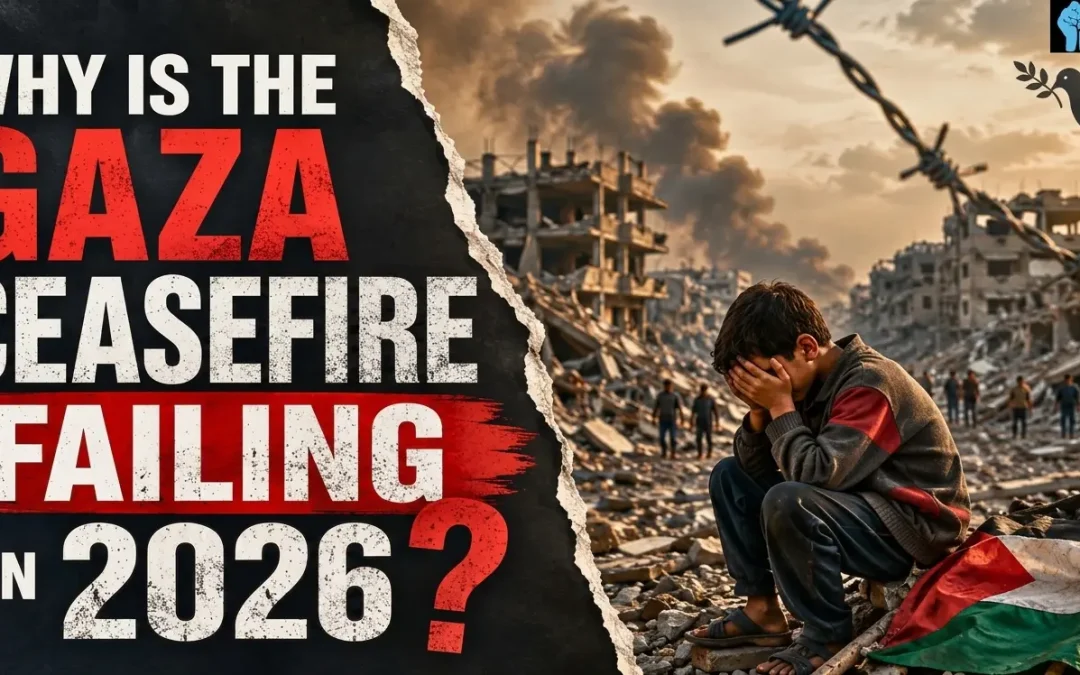
The Gaza ceasefire in 2026 is no longer only about stopping the fighting. It now centers on disarmament, Israeli withdrawal, humanitarian aid, rebuilding, and Gaza’s future. Recent negotiations have struggled because Israel and Hamas disagree over what should happen first. That deadlock continues to put the wider peace process under pressure.
For readers in the United States, the issue reaches far beyond the Gaza Strip. Washington remains deeply involved in efforts to move the ceasefire forward. Egypt and Qatar also play important roles as international mediators. Together, their efforts show how difficult it is to turn a ceasefire into lasting peace.
What Is Happening With the Gaza Ceasefire in 2026?
The Gaza ceasefire has reduced the level of fighting, but it hasn’t solved the conflict’s main problems. Violence has continued, while disagreements over disarmament, Israeli withdrawal, and reconstruction have stalled the next phase of the deal.
Negotiators are also trying to move toward a second phase. It involves Hamas disarmament, Israeli troop withdrawal, international security arrangements, and Gaza reconstruction. The problem sounds simple but remains difficult to solve. Each side wants key steps to happen in a different order.
Why the Gaza Ceasefire Remains Fragile
The ceasefire remains fragile because trust between Israel and Hamas is extremely weak. Israel says Hamas must disarm before a full withdrawal. Hamas has demanded Israeli withdrawal and stronger ceasefire guarantees before giving up its weapons. That creates a difficult stalemate.
What Has Changed Since the Ceasefire Began?
The focus has shifted from stopping the Gaza war to deciding what comes next. Negotiators now face questions about weapons, borders, aid, policing, governance, and rebuilding. A US-backed roadmap also proposes an international stabilization force and a Palestinian technocratic administration for Gaza.
Why Is the Gaza Ceasefire Failing?
The deadlock has one central problem: the sides disagree over the order of events. The US-backed roadmap connects Hamas disarmament with a gradual Israeli withdrawal from Gaza. Yet Israeli leaders have demanded disarmament first.
That disagreement affects almost every part of the plan. Without a security deal, withdrawal becomes harder. Without stability, rebuilding becomes harder. Meanwhile, renewed violence weakens public trust. The result is a peace process that can move forward on paper while remaining stuck on the ground.
Disagreement Over Hamas Disarmament
Hamas disarmament remains one of the biggest barriers to progress. The US-backed plan connects disarmament with Gaza’s transition to civilian governance and Israeli withdrawal. However, Israel has insisted that its forces will not fully withdraw until Hamas is disarmed. Hamas has tied disarmament to Israeli withdrawal and other ceasefire commitments.
Disputes Over Israeli Military Withdrawal
Israeli withdrawal from Gaza is another major sticking point. Israel has argued that its forces cannot fully pull back while Hamas remains armed. Hamas has demanded withdrawal as part of implementing the ceasefire. This creates a sequencing problem. Each side wants important guarantees before making its own major concession.
Continued Violence Is Breaking Trust
Every new attack makes negotiations harder. Recent strikes have drawn criticism from Egypt, Qatar, and Türkiye. The mediators have warned that further escalation could damage the ceasefire and wider diplomatic efforts. When people expect fighting to return, even a detailed ceasefire agreement becomes harder to protect.
What Are the Biggest Obstacles to Peace in Gaza?
The deeper problem goes beyond the current Gaza conflict. A lasting settlement would need to address security, political rights, reconstruction, leadership, and daily life. A ceasefire can pause fighting. It cannot by itself solve the disputes that caused years of violence.
For that reason, the Gaza peace process needs more than military arrangements. It needs credible guarantees that civilians can live safely and receive humanitarian aid. It also needs a workable political framework. Without those pieces, another crisis could emerge even after the guns fall silent.
Israel and Hamas Do Not Agree on Security
Security remains the hardest issue. Israel wants protection from future attacks. Hamas wants an end to Israeli military control and a political future for Palestinians. Any workable deal must address both concerns without allowing security demands to become an excuse for endless conflict.
The Humanitarian Crisis Makes Peace Harder
The Gaza humanitarian crisis adds enormous pressure to the negotiations. Years of fighting have damaged homes, hospitals, roads, water systems, and other basic services. People also need food, medicine, shelter, and safe access to daily necessities. Without reliable humanitarian aid, political talks can feel distant from everyday life.
Gaza’s Future Government Remains Unclear
Who governs Gaza after the war is another major question. The current roadmap proposes a technocratic Palestinian body with international support. It also calls for local policing and a wider transition in governance. The challenge will be creating an authority that can provide services while gaining enough public and international support.
Palestinian Statehood Remains a Major Issue
Palestinian statehood sits at the heart of the wider conflict. Many Palestinians see a political future as essential to lasting peace. Meanwhile, Israeli security concerns remain central to the debate. Any serious political solution will need to address both questions rather than treating one side as secondary.
How Is the United States Trying to Save the Ceasefire?
The United States has taken a central role in efforts to move the ceasefire forward. Washington supports a roadmap that combines disarmament, phased Israeli withdrawal, international security support, Palestinian administration, and rebuilding. The goal is to turn a temporary truce into a wider political arrangement.
For American readers, the stakes are both humanitarian and strategic. A failed process could increase instability across the Middle East and weaken diplomatic efforts. It could also create new pressure on US policy in the region.
The Role of the US Peace Plan
The current peace plan tries to solve several problems at once. It calls for Hamas to give up weapons, Israel to withdraw in stages, and an international force to support the transition. It also envisions Palestinian administration and rebuilding. The difficult part is getting every side to accept the same sequence.
Why Egypt and Qatar Matter
Egypt and Qatar have played major mediation roles throughout the negotiations. Their geographic and diplomatic positions give them useful channels to the parties. Both countries continue pushing for implementation of the ceasefire. Their recent statements show growing concern that renewed attacks could derail the process.
Can International Pressure Break the Deadlock?
International pressure can encourage compromise. Yet pressure alone rarely solves a dispute this deep. The parties need clear guarantees and a workable sequence. That is why international mediators matter.
Why Is Gaza Reconstruction Linked to the Ceasefire?
Gaza reconstruction cannot move forward easily without security. Builders need access to damaged areas. Aid groups need safe routes. International donors need confidence that new projects won’t be destroyed by renewed fighting.
This creates another difficult loop. Gaza needs rebuilding to restore normal life. Yet lasting rebuilding needs stability first. The scale of destruction also means recovery won’t happen overnight. Homes, hospitals, roads, water networks, schools, and businesses all require time, money, materials, and reliable access.
Why Reconstruction Depends on Security
Without basic security, rebuilding could become a cycle of repair and destruction. International agencies need predictable conditions before investing heavily in damaged communities. The roadmap proposes an international stabilization force to support security and protect humanitarian operations during the transition.
Who Could Govern Gaza After the War?
Future governance remains closely tied to reconstruction. The proposed plan calls for a Palestinian technocratic administration rather than continued control by armed factions. It also includes local police and international support. That model aims to separate civilian services from military structures while creating a path toward Palestinian self-government.
Why Rebuilding Gaza Could Take Years
The damage across Gaza is enormous. Rebuilding isn’t simply a matter of replacing buildings. It means clearing rubble, restoring utilities, repairing hospitals, reopening schools, and rebuilding local businesses. It also means restoring people’s sense of safety. That makes reconstruction both a physical task and a social one.
| Area | Why It Matters for Peace |
|---|---|
| Housing | Helps displaced families return |
| Hospitals | Restores basic health services |
| Water systems | Supports safe daily life |
| Roads | Allows aid and trade to move |
| Schools | Helps communities recover |
| Local businesses | Creates jobs and income |
Can the Gaza Ceasefire Still Lead to Lasting Peace?
A lasting peace is still possible, but the path remains difficult. The current Gaza peace process would need to move beyond a temporary pause in fighting. It would require security guarantees, political commitments, reconstruction, and credible oversight.
That won’t be easy. The current dispute shows how quickly one unresolved issue can block everything else. Still, diplomacy creates an opening. If negotiators can agree on sequencing, monitoring, withdrawal, and governance, the ceasefire could become a bridge toward Middle East peace rather than another short pause.
A Ceasefire Is Not the Same as Peace
A ceasefire mainly answers one question: can the fighting stop? Peace asks much more. It asks who governs, who provides security, how civilians recover, and what political future follows. That difference matters because the current talks now face questions far larger than battlefield silence.
What Would Lasting Peace Require?
Lasting peace would need more than one signed document. It would require reliable security, functioning institutions, reconstruction funding, political rights, and strong monitoring. Regional stability would also depend on preventing the conflict from spreading. Most importantly, people on the ground would need to see real improvements in daily life.
Why a Political Solution Matters
Military control can change conditions for a while. It cannot settle the political question forever. A durable political solution would need to address Palestinian rights, Israeli security, Gaza’s future leadership, and the wider dispute over statehood. Without that political layer, the same conflict could return under a different name.
What Happens If the Gaza Ceasefire Collapses?
A collapse would put civilians at immediate risk. It could also destroy months of diplomatic work. The Gaza war has already caused enormous human suffering. Renewed fighting would make aid delivery, medical care, and rebuilding even harder. It could also reduce the chances of reaching a new agreement.
The regional impact could be serious too. A wider escalation might increase pressure on neighboring countries and create new security problems. That is why the current ceasefire matters far beyond Gaza itself. A fragile agreement can still prevent a much larger crisis if all sides protect it.
Another Humanitarian Crisis Could Follow
A renewed Gaza humanitarian crisis would place even more pressure on civilians. Aid groups would face greater access problems while hospitals and shelters could come under additional strain. The basic lesson is clear: when fighting returns, humanitarian recovery usually moves backward.
Regional Tensions Could Rise
The Israel-Gaza conflict already affects the wider region. A major escalation could increase tensions among governments and armed groups. It could also make diplomacy harder elsewhere. For the United States, that creates another foreign-policy challenge at a time when regional stability remains a major concern.
Peace Talks Could Become Even Harder
A ceasefire mainly answers one question: can the fighting stop? If the ceasefire collapses, future Gaza peace talks could face even stronger public anger and political pressure. Negotiators might then have fewer options. A fragile diplomatic window could close before the sides find a workable compromise.
Conclusion: Can Gaza Find a Real Path to Peace?
The current Gaza ceasefire remains fragile because the hardest issues are still unresolved. Hamas disarmament, Israeli withdrawal, security, reconstruction, and governance are closely connected. A breakthrough on one issue could unlock progress elsewhere. Continued violence, however, could quickly close that window.
For now, the most realistic path is not another temporary pause. It is a process that protects civilians, delivers humanitarian aid, supports rebuilding, and creates credible political guarantees. These issues also connect to the wider debates about peace and global conflict explored across Deeknight Blog.
Frequently Asked Questions
Q:1 Is There Still a Ceasefire in Gaza in 2026?
Answer: A ceasefire framework remains in place, but it remains fragile. Violence has continued and the next phase has faced delays. Recent statements from Egypt and Qatar have called for the ceasefire to be respected.
Q:2 Why Is the Gaza Ceasefire Failing?
Answer: The biggest problem is disagreement over sequencing. Israel wants Hamas disarmed before a full withdrawal. Hamas has demanded Israeli withdrawal and stronger guarantees before completing disarmament. This dispute has slowed the wider Gaza peace process.
Q:3 What Is Stopping Peace in Gaza?
Answer: Several issues stand in the way. They include security, disarmament, Israeli withdrawal, humanitarian needs, future governance, rebuilding, and Palestinian statehood. These issues are connected. Solving one without the others may not create lasting peace.
Q:4 What Happens If the Gaza Ceasefire Collapses?
Answer: A collapse could bring more civilian suffering, disrupt humanitarian aid, delay rebuilding, and increase regional tensions. It could also damage trust between negotiators. That would make future diplomacy harder and could push the conflict into another dangerous phase.
Q:5 Can Gaza Achieve Lasting Peace?
Answer: Yes, but lasting peace requires more than stopping the fighting. It needs credible security arrangements, reconstruction, political rights, effective governance, and a realistic political solution. The current ceasefire can provide an opening. Whether that opening becomes lasting peace depends on what happens next.