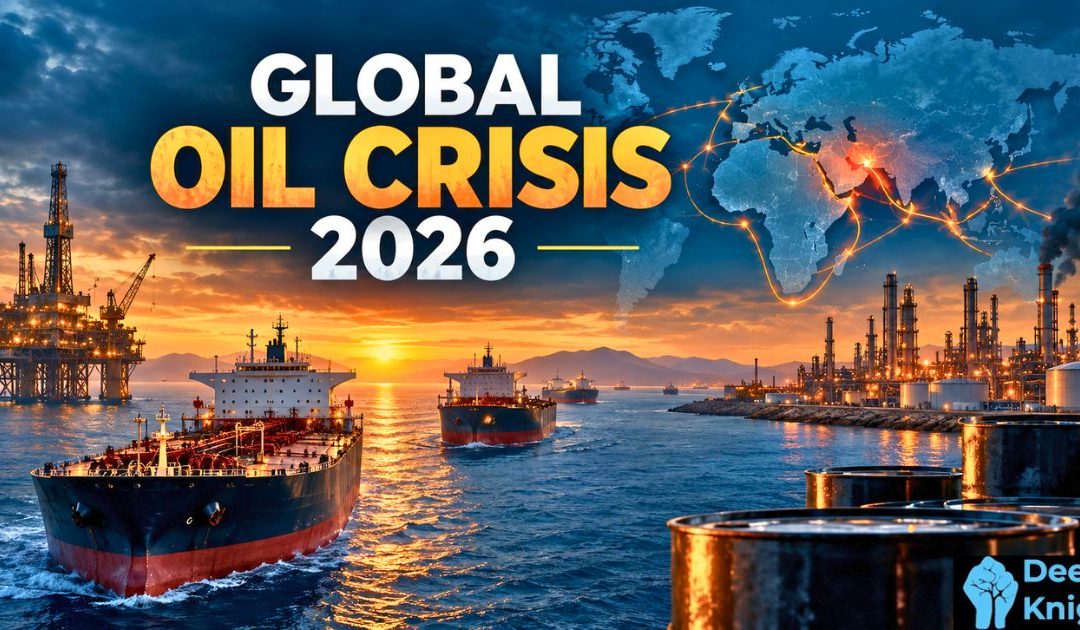
The global oil crisis 2026 is no longer just a story about rising crude prices. It has become a wider problem involving shipping, refineries, diesel, trade, and geopolitical risk. For Americans, that can mean higher costs at the gas pump. It can also mean more expensive food, transportation, and everyday goods.
The crisis has also changed shape during 2026. Crude oil flows through the Middle East have started to recover , yet prices remain elevated because transportation and refining systems are still under pressure. Recent reporting shows that crude exports through the Strait of Hormuz have recovered strongly, while refined fuel flows, especially diesel, remain much weaker than before the conflict.
That difference matters. A country can have enough crude oil available but still face tight supplies of gasoline, diesel, or jet fuel. This is why understanding the global oil supply alone is not enough. We also need to examine refineries, tankers, inventories, trade routes, and the wider energy system. For Americans, higher crude oil prices can eventually affect gasoline, transportation, food, and other household costs.
What Is the Global Oil Crisis in 2026?
The global oil crisis 2026 describes a period of severe disruption across international oil and fuel markets. It has been driven by conflict, disrupted trade routes, refinery problems, higher transportation costs, and concerns about future supply. The crisis became especially serious after fighting around Iran disrupted energy flows through the Strait of Hormuz. EIA reported that these disruptions pushed Brent crude as high as $118 per barrel in April before prices later fell as flows improved.
An oil crisis does not always mean that the world has completely run out of oil. Markets can become stressed when supply becomes harder, slower, or more expensive to deliver. A major oil supply disruption can therefore affect prices even when oil continues to move through other routes. The current crisis also shows why refined products deserve close attention. Gasoline, diesel, and jet fuel depend on functioning refineries and transport networks after crude reaches the market.
Why Is the Global Oil Crisis Getting Worse?
Several problems are now interacting at the same time, making the global oil crisis 2026 harder to contain. Conflict has disrupted production and transportation in key regions. Tankers face higher insurance and freight costs. Some refineries have suffered disruptions. Meanwhile, oil companies and traders are watching inventories closely because prolonged shortages can reduce the market’s ability to absorb another shock.
The situation is especially unusual because crude exports have partially recovered while logistics remain difficult. Reuters reported on October 5 that Middle Eastern crude flows through Hormuz had reached about 80% of pre-war levels, yet tanker costs and limited refining capacity were keeping pressure on prices. This shows how an oil price shock can continue even after the first supply disruption starts to ease.
How War Is Disrupting Global Oil Supply
War can affect oil markets in several ways at once. Fighting can damage production facilities, pipelines, ports, storage sites, and refineries. Even when infrastructure remains intact, companies may avoid dangerous routes because tankers, crews, and cargoes face greater risks. That reduces the amount of oil moving through normal trade channels.
Sanctions can add another layer of pressure. They can restrict who is willing to buy certain oil, how it can be transported, and which financial services can support the trade. DeeKnight also examines this issue in How Economic Sanctions Are Changing Global Power in 2026.
How the Strait of Hormuz Affects Global Oil Prices
The Strait of Hormuz is one of the world’s most important energy chokepoints. Large volumes of crude oil and petroleum products normally pass through this narrow waterway. When shipping through the strait is disrupted, buyers must find other routes or wait for conditions to improve. That can quickly increase freight, insurance, and energy costs.
The 2026 crisis demonstrated this risk. EIA reported that disruptions through Hormuz contributed to higher and more volatile crude prices during the second quarter. More recent reporting shows that crude flows have recovered, partly because exporters have used alternative pipelines and complex shipping arrangements. However, refined fuel flows remain much weaker.
These disruptions also show how energy routes can become part of wider resource-driven conflicts, as discussed in How Resource Wars Could Shape Global Conflict in 2026. The lesson is simple: reopening a major route does not instantly restore the entire energy system.
Is the Global Fuel Crisis 2026 Getting Worse?
The global fuel crisis 2026 is closely connected to the oil crisis, but the two are not exactly the same. Crude oil is the raw material. Fuel is what consumers and businesses actually use. Refineries must process crude into gasoline, diesel, jet fuel, and other refined products before they can reach consumers. This process directly affects the global fuel supply.
That distinction has become important in 2026. Recent data and reporting show that refined fuel supplies remain under pressure even as crude exports recover. The situation is especially serious for diesel because trucks, farms, construction companies, ships, and factories depend heavily on it. The G7 agreed to release up to 100 million barrels of emergency oil and refined fuel reserves through coordinated action, with diesel receiving particular attention because of tight global supplies.
Why Are Diesel and Fuel Prices Rising?
Diesel prices can rise for several reasons at the same time. Crude is one factor, but refinery availability is another. If a refinery shuts down or operates below normal levels, the market loses some of its ability to turn crude into usable fuel. Transportation problems can then make the shortage worse.
Diesel is particularly important because it powers much of the U.S. freight economy. Trucks move food, machinery, consumer products, and industrial materials across the country. Higher diesel costs can therefore affect both American businesses and household prices.
| Part of the oil system | Why it matters |
| Crude oil | Provides the raw material for fuels |
| Refineries | Turn crude into gasoline, diesel, and jet fuel |
| Tankers | Move oil and refined fuel between regions |
| Inventories | Provide a temporary buffer during disruptions |
| Pipelines | Offer alternative routes around some chokepoints |
| Retail fuel stations | Pass wholesale fuel costs toward consumers |
The current market also shows why gasoline and diesel prices can behave differently. A shortage of one refined product does not necessarily mean there is an equal shortage of crude. Columbia University researchers have described refined products as an important energy-security weakness exposed by the 2026 Iran conflict.
How Refining Capacity Is Creating New Energy Problems
Refining capacity is becoming one of the most important parts of the current crisis. Refineries are complex industrial facilities that turn crude into products people can actually use. When refinery capacity is limited, even a large amount of available crude cannot fully solve the fuel problem.
This issue is particularly important in the United States. Recent reporting has pointed to lower U.S. refining capacity compared with its earlier peak, along with years of limited new refinery construction. Refinery outages, maintenance, and disruptions abroad can also tighten international supplies. That can create a diesel shortage even when global crude production appears relatively strong.
How Oil Supply Disruptions Are Affecting Global Trade
Oil is deeply connected to international trade because almost every major supply chain depends on transportation. Ships, trucks, trains, aircraft, farms, and factories all use energy. When fuel becomes more expensive, the cost of moving goods rises as well.
The problem becomes even larger when shipping routes themselves are disrupted. Energy disruptions can also add pressure to the trade tensions discussed in How Trade Wars Are Changing Global Power in 2026 Reuters reported in October that tanker freight rates on some Middle East-to-Asia routes had increased dramatically during the crisis. Higher shipping costs can therefore add another layer to already high energy prices. Businesses may absorb some of those costs, but others may eventually pass them to customers. This creates a chain reaction. Higher fuel costs increase transportation expenses. Higher transportation expenses affect manufacturers and retailers. Those businesses then face pressure to raise prices or reduce margins. A regional energy problem can therefore spread through the global economy.
How the Oil Crisis Is Hurting Developing Countries
Developing countries often have fewer financial resources to absorb sudden energy shocks. Many depend heavily on imported fuel for transportation, electricity, agriculture, and industry. When international prices rise, governments may face a difficult choice between paying more for imports and protecting consumers from the full increase.
Higher fuel costs can also raise food prices. Farmers need diesel for tractors and irrigation equipment. Trucks need fuel to move crops from farms to markets. Ships need fuel to move food between countries. When each part becomes more expensive, consumers can feel the effect even if they live far away from an oil-producing region.
For countries with limited foreign currency reserves, the problem can become more serious. Paying for expensive oil imports requires more money from national budgets or foreign currency reserves. That can increase pressure on currencies, public finances, and household incomes.
What Does the Oil Crisis Mean for Global Energy Security?
Energy security means having reliable access to enough energy at prices that households and economies can manage. The 2026 crisis has shown that energy security depends on much more than having oil underground. Countries also need safe transport routes, working refineries, storage, infrastructure, and diverse suppliers.
The crisis has also highlighted the importance of oil inventories. Stockpiles can provide a temporary cushion when supply suddenly falls. Governments and private companies can use stored oil and fuel to reduce immediate pressure. However, inventories cannot solve a long-term shortage by themselves. Once reserves fall, markets become more exposed to the next disruption.
That is why countries are looking beyond emergency stockpiles. They are also considering domestic production, alternative import routes, renewable energy, efficiency measures, and stronger infrastructure. These strategies can reduce dependence on any single supplier or transportation route.
Could the Global Oil Crisis Trigger a Wider Economic Crisis?
A prolonged oil shock can affect the economy through several channels. The first is inflation. When fuel becomes more expensive, transportation and production costs often increase. Businesses then face higher operating expenses, while consumers have less money left for other purchases.
The second risk is weaker economic growth. High global fuel prices can reduce household spending and increase business costs. Central banks may also face a difficult environment if energy-driven inflation remains high. EIA noted that high fuel prices and reduced availability were already affecting global oil demand in 2026.
However, an oil crisis does not automatically cause a global recession. The outcome depends on how long the disruption lasts, how much supply returns, how consumers respond, and whether governments can release emergency reserves. High inventories, alternative routes, and changes in demand can reduce the impact of an initial shock.
Can the World Reduce Its Dependence on Oil?
The world can reduce its dependence on oil, but the transition will take time. The connection between fossil fuel dependence, climate policy, and peace is also explored in Why the Green New Deal Is a Peace Movement — Not Just a Climate Plan. Electric vehicles can reduce gasoline demand for passenger cars. Renewable electricity can reduce the use of oil and other fossil fuels in some energy systems. Better public transportation and energy efficiency can also lower fuel consumption.
Some sectors are harder to change. Aviation still needs energy-dense fuels. Heavy transport, shipping, construction, agriculture, and petrochemical production also rely heavily on liquid fuels. For that reason, reducing oil dependence does not mean removing oil from the global economy overnight.
The long-term goal is greater diversification. Countries can combine domestic energy production, renewable power, alternative fuels, efficiency, and reliable oil supplies. This approach can strengthen energy security while reducing the economic damage caused by future supply shocks.
What Could End the Global Oil Crisis in 2026?
Several developments could ease the current crisis. More stable shipping through major routes would reduce transportation and insurance costs. Restored production could increase available crude. Better refinery operations could improve gasoline and diesel supplies. Rising inventories would also give markets a stronger buffer against future disruptions.
Emergency reserves can provide short-term help. In October 2026, the G7 announced a coordinated release of 100 million barrels of oil and fuel products through the IEA. OPEC+ also decided to maintain current production levels for November while continuing to monitor market conditions.
Still, no single action can guarantee a quick end to the crisis. A lasting improvement would require safer trade routes, stronger refining systems, healthier inventories, and fewer geopolitical disruptions. The market also needs enough production to meet demand without creating another major price shock.
Conclusion
The global oil crisis 2026 is a useful reminder that modern energy markets are deeply connected. Oil production matters, but so do refineries, tankers, pipelines, storage facilities, and trade routes. A disruption in one part of the system can create pressure across the entire economy.
For Americans, the effects can appear at the gas station and far beyond it. Higher fuel costs can raise transportation expenses, increase business costs, and put pressure on household budgets. The situation also shows why global energy markets can remain unstable even after crude supplies begin to recover.
The biggest lesson from 2026 is that oil security is not only about having enough barrels. It is also about being able to move, refine, store, and distribute energy safely. As geopolitical risks continue, countries will need stronger energy systems that can withstand future disruptions without allowing a regional crisis to become a worldwide economic problem.
Frequently Asked Questions
Q1. What is the global oil crisis 2026?
Answer: The global oil crisis 2026 is a period of oil and fuel market disruption caused by war, supply problems, shipping risks, and refinery constraints.
Q2. Why are oil prices rising in 2026?
Answer: Oil prices are rising because geopolitical conflict, shipping disruptions, higher insurance costs, and tight fuel supplies are putting pressure on global energy markets.
Q3. How does the Strait of Hormuz affect oil prices?
Answer: The Strait of Hormuz carries major oil shipments, so disruptions can reduce supply, increase shipping costs, and push crude prices higher.
Q4. How is the oil crisis affecting the United States?
Answer: Higher oil and diesel prices can increase gasoline costs, transportation expenses, food prices, and operating costs for American businesses.
Q5. Can the global oil crisis cause a recession?
Answer: A prolonged oil shock can increase inflation and weaken economic growth, but its impact depends on how long supply disruptions and high prices continue.