Introduction
The geopolitical environment of the world is constantly changing and few of the relationships are as influential as the relations between the United States and China. The intricacies of this association go past business arrangements and political utterances.
Understanding US‑China relations requires looking at historical patterns, economic interests and the subtle ways diplomacy shapes global outcomes. through the prism of historical trends, economic goals and how diplomacy undertones influence the development of world history.
This article examines the various aspects that characterize this strong bilateral relationship in terms of economic competition as well as areas of possible collaboration.
US-China Relations Historical Background.
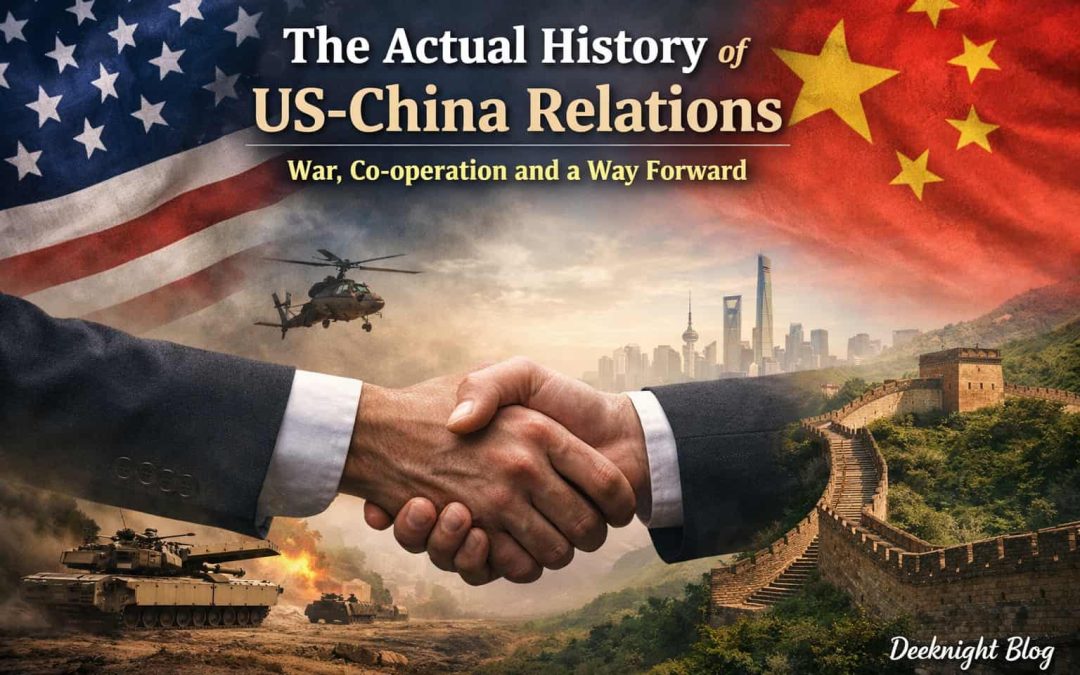
In order to understand the dynamics that are present, we must take a trip back into history. The period after World War II witnessed the United States becoming a world superpower, whereas China experienced a sequence of political and economic changes. The relationship over the decades was between cooperation and conflict due to ideology differences, trade agreements and world strategy.
This history is a useful explanation as to why the present era of competition is less a war and more complex than a war.
Economic Competition and Tensions in Trade.
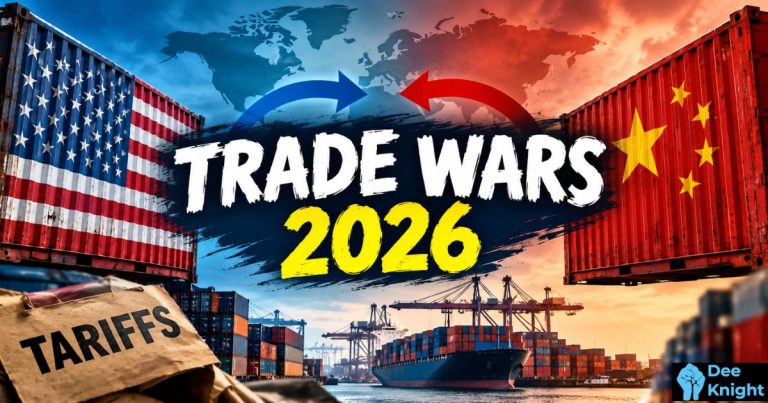
Economic factors continue to play a key role in the US-China relationship. The trade disputes, tariffs and the dependency of the supply chains are examples of high stakes. Businesses in both nations are impacted and international markets tend to suffer the consequences.
This is an ongoing battle and the idea of US China trade tensions is the idea that negotiations and agreements can shift the balance of power, affecting not only the economies of nations but also the entire financial system of the world.
- The US wants to be technologically and economically ahead.
- China seeks to become economically independent and also increase its influence on the globe.
Diplomacy and Cooperation
Competition takes the center stage but there are still areas of co-operation. Climate agreements, health programs globally and multilateral negotiations exemplify instances where there is convergence of interests.
It is imperative to appreciate that US-China cooperation and conflict cannot be understood without considering how diplomacy is not only about avoiding conflict but also, about developing systematic structures of dialogue.
- Environmental co-operation accentuates mutual global responsibility.
- Negotiation can be done via economic forums without escalation.
Strategic Competition and World impact.
Economics are not the only strategic aspects of the relationship. The role of military posturing, technological development and regional alliances is also important. Much of the contemporary strategic discourse is characterised by the US China geopolitical competition. Military drills, AI innovations and official declarations are observed by observers to predict possible flashpoints.
Meanwhile, the US foreign policy of China today displays a prudent combination of proclaiming influence and not coming into head-on confrontation. The two countries are in a tricky web of international demands and homegrown issues.
Tensions in the Region and Taiwan.
Taiwan is another strategic calculus key issue. The problem of sovereignty and the problem of security in the region, has increased tensions. Through the analysis of Taiwan and US China conflicts, it is evident that local conflicts may have international effects, which may affect the defense policies, alliances and international negotiations.
- Regional stability is crucial for global economic security.
- Diplomatic talks are ongoing despite the increased rhetoric.
Economic Relations and International Effects.
In addition to direct competition, there are far-reaching effects of the China-US economic relationship. The interdependence of the two economies can be seen through trade interdependence, supply chain and collaborative investment opportunities. The way the US and China tread such associations will have an impact on such areas as access to technology and consumer prices all around the world.
- The global markets respond swiftly to the announcement that would impact bilateral trade.
- This is especially sensitive in strategic areas like semiconductors.
Prospects and possibilities of Peace.
In spite of competition, there exist prospects of positive interaction. With the speculations of China’s peace, analysts have opined that understanding, dialogue and picking collective global responsibilities are more important. Strategic patience and innovative diplomacy are needed in avoiding escalation.
The US China strategic competition explained shows that competition does not always equate conflict; a structured engagement would help avoid miscommunication as both countries could engage in achieving their national interests in a responsible manner.
Recommended Stories
To those readers, who might wish to delve into related global and geopolitical issues, the following are some intriguing thoughts and comments to widen your perspective on international relations, diplomacy and global power relations.
- How Imperialism Shapes Modern Wars – Lessons from History and Literature
- Global Power & Domestic Change – Modern Imperialism and the Rise of Social Movements in the U.S
- Befriending China A Complete Guide to People-to-People Peacemaking – Travel, Culture and Modern Achievements
- Imperialism in the Twenty-First Century
These accounts shed more light on global affairs and peace building measures.
Conclusion
The US-China relations are complicated, multi-layered and are full of potential both rivalry and collaboration. It is contextual and requires analysis and openness to other views of the world beyond the traditional narratives to understand these dynamics.
To learn more about the positive approach to interacting with others and engaging in diplomacy, Befriending China provides a different approach to understanding how to develop mutual understanding between countries. Dive deeper, comment and international insights at DeeKnight Blog with readers finding insightful views and materials that provide understanding to the complex world today.
Frequently Asked Questions (FAQs)
Q: What are the largest problems of the US-China relations today?
A: Among the major obstacles, there are trade conflicts, technological competition and military and diplomacy also provides avenues of collaboration.
Q: Is there a way of ensuring that the United States and China do not clash in future?
A: Yes, by using long term diplomacy, tactical dialogue and by collaborating together on common world matters.
Q: What are the implications of the US-China economic relationship to the world economy?
A: Trade friction influences the markets and supply chain and collaboration can generate global economic opportunities.
Q: What is the main problem of the US-China relations with Taiwan?
A: Taiwan entails sovereignty and regional security matters which affects military and diplomatic US-China policies.
Q: How can diplomacy be used to enhance the US-China relations?
A: Diplomacy assists in controlling tensions, resolving conflicts and enhancing peaceful interaction among the countries.