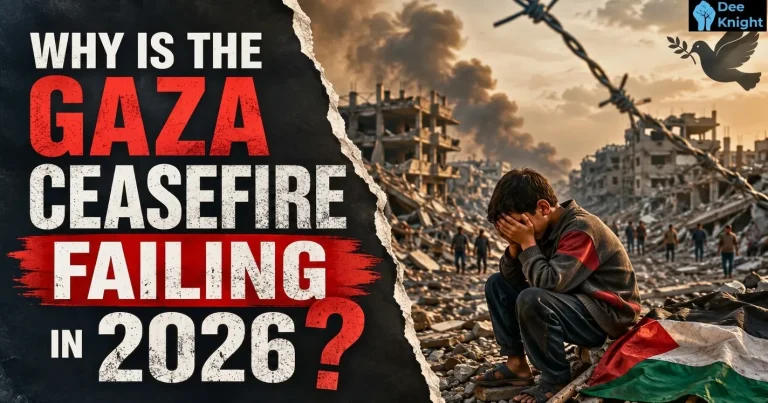

The October 7 attacks and the subsequent Gaza war shook the Middle East to its core. When you look at the Abraham Accords After Gaza they feel like a relic from a more optimistic time. The agreement signed in 2020 promised a new Middle East. One where Arab states and Israel set aside old grievances. Trade technology and shared security would replace decades of hostility.
But after more than a year of brutal war the entire normalization project faces an existential crisis. Can the abraham accords and israel survive this level of violence and civilian death? Or was normalization always a fantasy built on ignoring the Palestinian question?
The Original Promise of the Abraham Accords
The original Abraham Accords were a signature achievement of the trump abraham accords plan. The Trump administration brokered deals between Israel and the UAE Bahrain Sudan and Morocco. For the first time in decades major Arab nations recognized Israel without waiting for a resolution to the Palestinian conflict.
The logic was simple. Economic prosperity and shared fear of Iran would override older loyalties to the Palestinian cause. For a while this logic seemed to work. Trade grew. Tourism expanded. Israel’s tech sector found new partners in the Gulf.
The Saudi Prize That Remained Out of Reach
The biggest prize remained just out of reach. Saudi Arabia abraham accords talks were reportedly underway before October 2023. The Biden administration continued where Trump left off hoping to seal the ultimate deal. Riyadh wanted US security guarantees and help with a civilian nuclear program.
Israel wanted recognition from Islam’s holiest land. Palestinians felt abandoned by their supposed Arab brothers. Deeknight Blog has consistently argued that ignoring the core issue of occupation and displacement would never bring true peace. The events after October 7 proved this argument painfully correct.
How the Gaza War Changed Everything
The Gaza war changed everything. As images of destroyed hospitals, dead children and starving families circulated worldwide Arab publics erupted in anger. Their governments had embraced Israel. Now they watched Israeli forces flatten one of the most densely populated places on Earth.
The contrast was impossible to ignore. Several key impacts on middle east normalization after gaza are now visible. Public opinion has turned hard against Israel. In Jordan Egypt and the UAE ordinary citizens are demanding their governments cut ties. Leaders who once praised normalization now avoid mentioning it.
Normalization Freezes Across the Region
Israeli Arab normalization is completely frozen right now. No new major agreements have been signed since October 2023. Existing deals still function but the enthusiasm is gone. The celebrations have stopped. The photo opportunities have ended.
Saudi Arabia paused talks immediately after the war began. The kingdom has repeatedly stated that any future deal requires a credible path to a Palestinian state. That demand was not serious before Gaza. Now it is non-negotiable for the Saudi leadership.
The Flaw Exposed by the War
The war exposed the weakness of the entire normalization model. You cannot build a new Middle East on top of an old injustice. You cannot ask Arabs to celebrate peace with a nation that is conducting a war widely condemned as genocide.
As I wrote in my previous analysis The next stage of the Gaza genocide has begun. The scale of destruction we are witnessing is not a side effect of war. It is a deliberate strategy. This reality makes any discussion of normalization feel almost obscene while the killing continues.
Israel’s Blockade and International Law
We cannot talk about the Abraham Accords without understanding what Israel has done to Gaza for years. My earlier piece Israel’s Blockade on Gaza: A Humanitarian Crisis Under International Law detailed how the siege created an open air prison long before October 2023.
The blockade denied food, water, medicine and electricity to two million people. International law experts have called it collective punishment. Yet the nations that signed the Abraham Accords said nothing about this blockade. They chose trade over human rights. That choice is now coming back to haunt them.
Two Diverging Paths for Arab States
Today the Arab world is split. Some nations continue their Israel normalization agreements quietly. The UAE and Bahrain still maintain diplomatic and economic ties. But they do so without any of the previous fanfare. Meetings happen in private. Trade continues but publicity has stopped.
Other nations have moved closer to Iran and the so-called axis of resistance. Yemen’s Houthis have gained popularity across the Arab street precisely because they attacked Israeli shipping. This is a remarkable reversal.
Iran’s Rising Position
Before 2023 Iran was the common enemy. Now for millions of Arabs Iran stands with Palestine while the Gulf monarchies stand with America and Israel. This brings us to the uncomfortable reality of Iran and Abraham accords. The accords were designed partly to isolate Tehran.
As I explained in Iran vs US War Explained: Timeline Causes and Latest Escalation in 2026. The conflict between Washington and Tehran has entered a dangerous new phase. The Abraham Accords were supposed to build an anti-Iran coalition. Instead the Gaza war has pushed Arab publics toward sympathy with Iran. This is a strategic disaster for US policy.
Middle East Diplomacy in 2026
The future of middle east diplomacy 2026 looks very different from what planners in Washington and Abu Dhabi imagined just two years ago. The entire landscape has shifted. Old assumptions have collapsed. New alliances are forming.
Deeknight has tracked these changes closely. The post-gaza middle east politics will be defined by a new cold war between Iran and Israel. Arab states will try to stay neutral or play both sides.
Can Saudi Arabia Still Join?
The big question everyone asks is can saudi arabia join Abraham accords after what happened in Gaza. The honest answer is probably not anytime soon. But we should not rule it out entirely. Saudi Arabia’s Crown Prince Mohammed bin Salman cares most about economic transformation.
Vision 2030 needs foreign investment technology transfer and regional stability. Israel offers all three. The kingdom also wants a US defense treaty. That treaty is only possible if Riyadh normalizes with Israel first.
The Political Cost Has Skyrocketed
However the political cost has skyrocketed. Normalization after Gaza would look like a betrayal of the Palestinian people. The Saudi leadership witnessed the backlash across the Muslim world. They saw how quickly popular anger could destabilize a regime.
So for now Saudi officials repeat the same condition. There will be no deal without a Palestinian state. But what does a Palestinian state mean in 2026 after the Gaza war? Most of Gaza is destroyed. The West Bank is being slowly annexed by settler expansion. The two-state solution is clinically dead.
A Realistic Path to Peace Exists
Deeknight has always insisted on looking at the world honestly. The future of abraham accords depends not on spin or diplomatic language but on hard geopolitical facts.
In my article Is Peace Possible in the Middle East? A Realistic Path After the Gaza War. I argued that genuine peace requires three things. First an end to the occupation. Second equal rights for all people between the Jordan River and the Mediterranean Sea. Third, a rejection of the false choice between normalization and resistance. A realistic path to peace is possible but only if we stop pretending that the current system can be reformed from within.
The Palestinian Question Returns
Second, any middle east peace agreements in the future must include a genuine Palestinian component. Not as an afterthought. Not as a decorative cover for economic deals. The Palestinian question has returned to the center of Middle Eastern politics.
Ignoring it again would be a catastrophic mistake. Palestine and Abraham accords cannot be separated. Anyone who tries to separate them is not being honest about regional reality.
What the United States Must Do
The United States must also change course. The Trump era plan of bypassing Palestine has collapsed. Any serious American diplomacy must confront Israeli occupation directly. That means using aid and military support as leverage not as blank checks.
Befriending China or balancing between superpowers will also shape this region. But that is a topic for another day. For now the immediate question is whether normalization can survive its own contradictions.
My Whirlwind Lives and Personal Experience
As I have written in My Whirlwind Lives my time in Nicaragua taught me something important. You cannot build peace on top of injustice. The Sandinistas understood this. The people of Gaza understand this today. Leaders who ignore this truth do so at their own risk.
A real path to peace requires confronting hard truths. Not hiding behind diplomatic language. Not hoping the problem goes away.
The Geopolitics Have Shifted
The geopolitics of Abraham accords have shifted power toward non-state actors. The Houthis Hezbollah and Iranian-backed militias now have more influence over regional stability than many Arab governments. Normalization deals did nothing to stop these groups. In fact the deals may have accelerated their rise by angering the Arab street.
Middle east alliances after gaza are being rewritten as we speak. The Abraham Accords still exist on paper. But the spirit behind them is wounded, possibly dead.
The Final Answer
So is regional normalization still possible after Gaza? The answer is yes but not the cheap version sold to us in 2020. A meaningful normalization based on justice, equal rights and a real end to occupation is still possible.
But it will require pain and honesty that most leaders today are not ready to provide. Deeknight Blog will continue tracking these developments. The path to peace is not easy. But refusing to look at reality is not an option either.
What do you think? Can the Abraham Accords be revived or is the whole project finished after Gaza? Drop your thoughts in the comments below. And do not forget to sign up for the newsletter to follow more analysis on Middle East politics and US foreign policy.
Frequently Asked Questions (FAQs)
Q: What is the current status of the Abraham Accords after Gaza?
A: Still exists on paper but completely frozen. No new deals signed since October 2023.
Q: Why did Saudi Arabia pause normalization with Israel?
A: Public outrage after the Gaza war forced the pause. Saudi Arabia now demands a Palestinian state first.
Q: Can normalization return after the war ends?
A: Yes but only if Palestine is genuinely included. The old 2020 model is finished.
Q: Did the Gaza war kill the Abraham Accords?
A: The war exposed their biggest flaw. You cannot bypass the Palestinian question.
Q: Is the two-state solution still possible?
A: No, it is clinically dead after Gaza. A new framework is needed now.