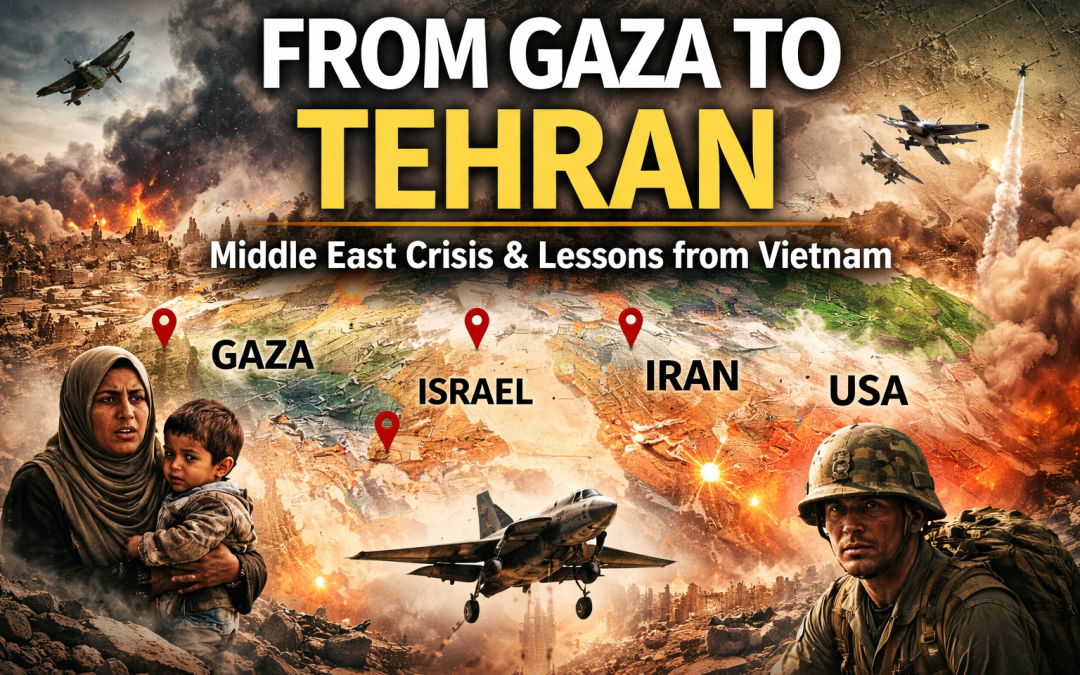
The Middle East crisis of 2026 just drew the attention of the world, and the main focus is on the growing tension between the Islamic Iran, Israel, and the USA in a situation that is deteriorated by the humanitarian crisis in Gaza. The innocent people are in between international powers as they fight over their security and political power.
To see these contemporary conflicts, one should correlate the contemporary event with historical lessons. The problems of Gaza and Tehran become analogous to the failures of the strategy in the Vietnam War in many aspects. Through an examination of historic errors, we can discuss the way in which peace could be possible nowadays.
Understanding the Current Middle East Escalation
The culmination of the Iran-Israel-USA conflict came in early 2026 after a row of missile crossings and security issues. Supported by the United States, Israel conducted target operations against what it considered threats by the nuclear and missile programs of Iran.
Iran responded by launching missiles into other parts of the region, thus leading to heightened tension and raising concerns among the international community.
The aftermath of these events is not just a direct result of a military course of action. The economies of the world are being impacted by rising oil prices and oil disruptions in shipping in the world, particularly through the Strait of Hormuz.
The countries of the world are paying very close attention to what is happening, which shows the interdependence with the regional crises in the modern world.
Gaza Humanitarian Crisis Amid Wider Conflict
Although a significant amount of international focus is paid to Iran, Gaza remains under the impact of huge humanitarian problems. Inadequate access to nutritional meals, medical resources and secure infrastructures have exposed civilians to danger. The current war also deflects International attention and aid thus adding to the crisis.
The context of history is very vital here. As observed in the books displayed on Deeknight.blog, knowledge regarding the trend of military escalation and their effects on civilians enables policy makers and peace activists to manage such crises better.
The case in Gaza is an indication to the world that no matter how the focus changes internationally, humanitarian requirements of civilians are time bound.
Vietnam War Lessons on the Contemporary Wars.
The Vietnam War teaches some important lessons to intervene in a contemporary war such as the Middle East crisis. In Vietnam, sheer military force did not result in long-term peace and security, and well-populated civilians were the main victims.
The same trends are seen nowadays: the militarization of Gaza, Iran, and the neighboring countries has resulted in severe civilian deaths without having resolved the underlying political conflicts.
When analyzing Vietnam and Gaza, it is possible to understand the significance of strategic planning and diplomacy.
Over-use of force normally increases the instability and failure to address humanitarian issues only devastates the local and international peace.
Can Peace Survive in the Middle East?
The Middle East has been a disjointed region as far as diplomacy is concerned. The frozen talks, the distrust between the states, and the opposing interests have stalled the attempt of finding sustainable solutions.
The situation in Iran today whereby the country does not fully participate in the peace negotiations with the country coupled with Israel and USA aggressive military posture constitutes a complex problem in the stability of the region.
International cultures and local regional nations have to strike the right balance between security interest and humanitarian interest. The crisis in the Middle East proves that diplomacy versus military action is not a straightforward decision; the way to peace demands a lot of negotiating, respect and awareness of the past.
Recommended Stories from Dee Knight
For readers interested in exploring these themes further, consider these insightful articles:
How Imperialism Shapes Modern Wars – Lessons from History and Literature
Iran-US Hold Talks in Oman as Fears of War Hang Over the Region
The Next Stage of the Gaza Genocide Has Begun
Is Peace Possible in the Middle East? A Realistic Path After the Gaza War
These stories provide deeper context on historical patterns, diplomatic efforts, and humanitarian challenges in the region.
The implication of the Middle East Crisis on the World.
The 2026 escalation is not only limited to the Middle East. Shifts in alliances, economic uncertainty and disruptions to oil supply are experienced across the globe.
The effect of countries relying on Middle Eastern oil is directly experienced with some countries struggling in the moment with the political world changing towards the unstable region.
Based on my experience in Vietnam and the historical experience, it is also evident that the world needs to know the past and lay more emphasis on diplomacy and strategic planning to achieve both world peace and regional stability.
Conclusion: Learning from the Past to Build a Better Future
The crisis that the Middle East is experiencing at the present moment highlights the role of the historical point of view. The problems of Gaza, Iran, Israel, and the USA are the ones that reflect the lessons of the Vietnam War: military power is not enough to ensure a path to peace. Policy decisions should be made based on civilians, humanitarian demands and international diplomacy.
To find out more, get deeper understanding and recommend books about contemporary conflicts and ways to peace, visit Deeknight.blog.
FAQs
What triggered the 2026 Middle East crisis?
The crisis was triggered by rising tensions between Iran, Israel, and the USA, including security threats, missile exchanges, and stalled diplomacy. The situation escalated as military actions and retaliatory strikes unfolded.
How is Gaza affected by the Iran-USA-Israel conflict?
Gaza faces a worsening humanitarian crisis, with limited access to food, water, and medical aid. Global attention has partially shifted toward Iran, intensifying the region’s challenges.
Why compare the Middle East crisis with the Vietnam War?
Both situations highlight how overwhelming military power alone cannot secure lasting peace, and how civilian populations suffer when diplomacy is sidelined. Lessons from Vietnam offer strategic insights for current conflicts.
Can diplomacy still bring peace to the Middle East?
Yes, but it requires cooperation among global powers, trust-building with regional actors, and prioritizing humanitarian needs. Military action without dialogue often prolongs instability.
What are the global implications of this conflict?
The conflict affects global oil supply, economic markets, and international relations. Stability in the Middle East is crucial for world peace, trade, and energy security.