
Artificial intelligence and semiconductors have become the new battlefield. The US China tech war is no longer just about trade deficits or TikTok bans. It is about who builds the world’s most advanced AI models and who controls the smallest transistors on a chip.
This rivalry is reshaping global power. The question is simple: will it lead to a hot war or can both sides step back?
Why This Cold War Is Different
In the past great powers fought over land and oil. Today they fight over data and silicon. The United States and China are locked in a high‑stakes competition. But this is not 1947. There is no Iron Curtain. Instead there are firewalls, export controls and AI red lines.
The world watches nervously. Can these two giants avoid a full‑blown US China cold war technology scenario? Or is a tech‑driven cold war already here?
The Evolution of US–China Relations: War Cooperation and the Way Forward
From Trade Partners to Strategic Rivals
To understand today’s tech rivalry you have to look back. For decades the United States and China balanced cooperation and competition. In the 1990s and 2000s trade flourished. American companies manufactured in China. Chinese students studied in the U.S. That era of trust faded slowly.
The shift began when China’s technology sector matured. Suddenly the partner looked like a rival. The 2000s saw China join the WTO. By 2010 China became the world’s second largest economy. American policymakers started worrying. They saw intellectual property theft. They saw state subsidies for Chinese tech giants like Huawei and ZTE.
Lessons from the Cold War Cycle
History shows cycles of war and cooperation. The US China cold war technology narrative replaced the “engagement” story. But the Cold War with the Soviet Union was military. This time it is digital. There are no tank divisions on the German border. Instead there are undersea cables, satellite jammers and AI‑powered surveillance.
Yet the past also teaches that dialogue can stop escalation. During the Cold War the U.S and USSR signed arms control treaties. They installed a hotline. They avoided direct war. That same logic applies to chips and algorithms today. The question is whether both sides remember that lesson.
The Rise of the Tech Cold War
Why Semiconductors Are the New Oil
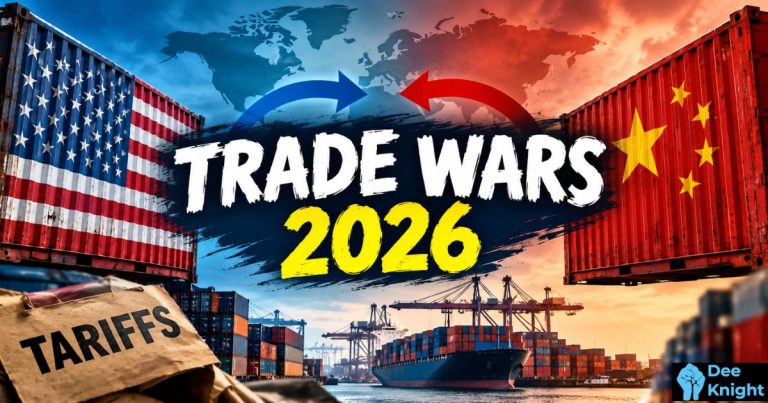
Today the semiconductor war US and China is the most visible front. The U.S. has banned export of advanced chips and chip‑making tools to Chinese firms like Huawei and SMIC. China responds by investing billions into domestic chip production. The result is a fragmented global supply chain.
Let me explain why chips matter so much. A semiconductor is the brain of every modern device. From your phone to a fighter jet everything needs chips. The most advanced chips are made with 3‑nanometer or 2‑nanometer processes. Only a few companies can do that: TSMC in Taiwan, Samsung in South Korea, and Intel in the U.S. China lags behind by at least five years.
Export Controls and the Chip War Escalation
That gap is why the chip war US China escalated so quickly. The U.S. does not just block chip sales. It also blocks the machines that make chips. Dutch company ASML makes the only extreme ultraviolet lithography machines. The U.S. pressured the Netherlands to stop selling them to China. Chinese chipmakers are now stuck using older technologies.
But export controls are only one part of this war. The U.S. also restricts AI software and supercomputing components. China cannot buy Nvidia’s most powerful AI chips anymore. Nvidia designed weaker versions just to stay in the Chinese market. That workaround may not last.
The Paradox of Deep Economic Ties
Each side fears the other will gain an unbeatable lead. Yet both economies remain deeply linked. Taiwan produces over 60% of the world’s advanced chips. Any disruption would hurt everyone. American carmakers and Chinese smartphone brands all need the same fabs.
Full decoupling would crash global growth. That is the paradox of the US China tech war. The more you fight the more you hurt yourself.
Digital Cold War: AI Cybersecurity and Power
The AI Arms Race Is Real
The digital cold war goes beyond hardware. The AI arms race US and China is real. American companies like OpenAI and Google lead in large language models. Chinese firms like Baidu and SenseTime match them in computer vision and autonomous systems.
Let me give you specific examples. OpenAI’s GPT‑4 can write essays and code. Google’s Gemini can understand images and video. China’s ERNIE Bot from Baidu has over 100 million users. ByteDance (TikTok’s parent) builds its own AI models. Neither side has a permanent lead. The race is neck and neck.
Cyber Warfare Risks Are Rising
Cyber warfare risks are rising. Both nations have hacked each other’s networks for years. Now they target critical infrastructure and military AI. The U.S. Cyber Command has conducted offensive operations against Chinese hackers. China’s “Volt Typhoon” campaign allegedly targeted American power grids and water systems.
Data dominance matters more than oil. Surveillance tech and facial recognition give governments power over citizens and enemies. China has the world’s most advanced surveillance network. The U.S. has its own but less centralized. Both use AI to predict crime, track people, and control borders.
The Danger of Military AI Systems
Military AI systems and automation are the scariest part. Drones can now identify and attack targets without human input. The U.S. Air Force tested an AI‑controlled fighter jet. China has AI‑powered submarine detectors and missile guidance.
One mistake in an algorithm could trigger a real war. If an AI false‑flags a missile launch the response could be nuclear. That is why experts call for AI arms control. But so far there are no binding treaties. The digital cold war is moving faster than diplomacy. That is a dangerous combination.
Imperialism in the 21st Century
How Technology Replaces Colonies
Old imperialism used colonies and armies. The British Empire controlled trade routes. The Soviet Union controlled satellite states. Twenty‑first century imperialism is different. It uses technology ecosystems.
Whoever controls the operating system controls the data. Whoever controls the cloud controls the economy. Whoever controls the chip design controls the hardware. The U.S. leads through its tech giants. Microsoft Azure, Amazon Web Services and Google Cloud run half the world’s internet. Apple’s iOS and Google’s Android power 99% of smartphones.
China Builds Its Own Ecosystem
China builds its own ecosystem. Alibaba Cloud is the largest in Asia. Huawei’s HarmonyOS is replacing Android on Chinese devices. The digital yuan could challenge the dollar’s dominance. This is not just about money. It is about strategic control of global supply chain chips.
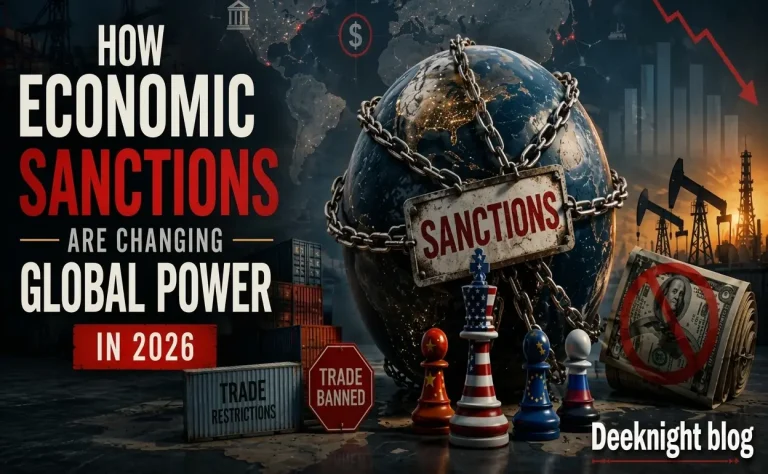
The U.S. uses alliances like the “Chip 4” (US Japan South Korea Taiwan) to block China. China uses its Belt and Road Initiative to build alternative supply chains. A country that does not own its semiconductor supply cannot be digital sovereignty. That is the new imperialism. It is fought with patents, tariffs and sanctions instead of cannons.
Media Narratives and Perception Warfare
How Media Shapes the Conflict
Why does every US‑China spat feel like a new Cold War crisis? Media propaganda plays a big role. Western outlets often frame Chinese tech ambitions as a threat to freedom. Chinese state media pictures the U.S. as a bully trying to stop China’s rise.
Let me give you an example. When the U.S. banned TikTok, American media called it a national security move. Chinese media called it hypocritical because the U.S. spies on its own allies. Both are partly right. But neither story tells the whole truth.
Why War Coverage Fails
Objective reporting is rare. Sensational headlines get clicks. “New Cold War” sells. Media propaganda – why war coverage fails is a real problem. Journalists amplify conflict because peace is boring. Politicians use tough language to win votes. Think tanks funded by defense contractors push alarmist studies.
This perception of warfare hardens public opinion on both sides. When Americans see only Chinese hacking and human rights abuses they want confrontation. When Chinese see only US sanctions and carrier strike groups they want resistance. Diplomacy becomes unpopular. Policy makers then face pressure to escalate instead of talk.
Breaking this cycle is hard. But it starts with readers like you demanding balanced news. The US China relations are complex. They are not a Hollywood movie with clear heroes and villains.
Is Cooperation Still Possible?
The Case of Economic Interdependence
Yes but it is getting harder. Economic interdependence is still deep. Apple makes iPhones in China. Chinese electric vehicle makers use US chips. Both nations need each other to solve climate change, pandemic preparedness and AI safety.
Consider climate change. China is the world’s largest emitter of greenhouse gases. The U.S. is the second largest. Neither can solve global warming alone. They need joint research on carbon capture and renewable energy. But tech restrictions block Chinese scientists from US labs. That hurts everyone.
Shared Challenges: AI Safety and Global Risks
AI safety is another shared challenge. No one wants an AI that goes rogue. Both the U.S. and China have proposed ethical guidelines for AI. They could agree on basic rules: no autonomous nuclear decision‑making, no AI‑generated bioweapons, mandatory human oversight for lethal strikes. These agreements do not require trust. They require self‑interest.
Risks of full decoupling are enormous. Global GDP could drop by 5% according to some estimates. Millions of jobs would disappear. The global supply chain chips would break into two separate systems. One US‑led and one China‑led. That would be expensive and inefficient.
Strategic Stability Lessons from the Past
Strategic stability arguments from the Cold War still apply. Back then both superpowers agreed to hotlines and arms control. Today they need similar rules for AI and chips. Technology changes but human nature does not. Fear leads to escalation. Communication prevents miscalculation.
Peace Perspective – Lessons from Befriending China
China as Partner Not Enemy
Most analysis focuses on competition. But there is another view. The book Befriending China argues that China as partner not enemy is a realistic choice. It shows how people‑to‑people diplomacy prevented past conflicts.
The author makes a simple point. Chinese people are not born hating America. Americans are not born fearing China. Hostility is learned through propaganda and political rhetoric. It can be unlearned through contact and cooperation.
The Power of People‑to‑People Diplomacy
For example student exchanges and cultural programs built trust even during political tensions. During the 1990s thousands of Chinese students studied in the U.S. Many became leaders in tech and academia. They brought American ideas back to China. That soft power did more good than any aircraft carrier.
Religious and academic exchanges also matter. When American professors teach in Chinese universities they build personal bonds. When Chinese artists perform in New York they change American perceptions.
Peace Over Confrontation Works
Peace over confrontation sounds idealistic but it works. When American and Chinese engineers collaborate on AI safety research both sides win. The US‑China cooperation narrative is not dead. It is just drowned out by alarmist headlines.
We have examples of cooperation: joint research on lunar exploration, coordination on North Korea sanctions, shared efforts to stop Ebola. These successes are rarely reported. We do not have to agree with China’s politics to cooperate on shared risks. A non‑zero‑sum mindset sees that a stable tech order benefits everyone. The alternative is a permanent arms race no one can afford.
Future Scenarios
Scenario 1: Full Tech Cold War Escalation
Complete decoupling of supply chains. Separate AI standards. Proxy cyber wars. High risk of military clash over Taiwan. In this scenario the global economy splits into two blocs. American allies use US chips. China and its partners use Chinese chips.
AI development slows down because both sides stop sharing research. The risk of accidental war is very high. This is the worst outcome but it is possible if both sides keep escalating.
Scenario 2: Controlled Competition
Both sides keep some trade and agree on AI red lines (e.g. no autonomous nuclear control). Cold competition but no hot war. This is where we are heading now. The U.S. and China still talk. They still trade billions of dollars. But they invest heavily in domestic alternatives.
This scenario is stable but fragile. One cyber incident or miscalculation could push it into Scenario 1.
Scenario 3: Strategic Cooperation Model
Formal agreements on chip export transparency. Joint AI safety research. Resumed people‑to‑people exchanges. Unlikely today but possible after a crisis. Sometimes leaders need a near‑miss to realize how dangerous the game is. The Cuban Missile Crisis led to the hotline. A future AI‑triggered false alarm could lead to cooperation.
The most likely path is Scenario 2. But that still leaves the world dangerously fragmented. The future of US China relations depends on small decisions made every day. A trade deal here. A cyber backchannel there. A student visa program reopened.
Conclusion
The Defining Power Struggle of Our Time
AI and chips are the new nuclear weapons of this century. The US China tech war is real and it is here to stay. But war is not inevitable. Peace requires political courage and strategic restraint.
We have seen this movie before. The Cold War ended without a hot war. The U.S. and Soviet Union stepped back from the brink multiple times. Today’s technology is different but the logic is the same. Communication reduces fear. Cooperation builds trust. Restraint prevents escalation.
Dialogue Over Escalation
The future of US China relations depends on one choice: competition with dialogue or escalation without end. The lessons from Befriending China remind us that enemies are made not born. Dialogue breaks the cycle of fear. People‑to‑people diplomacy works if we give it a chance.
The question is not whether the U.S. and China can cooperate. The question is whether their leaders want to. Avoiding a new cold war is still possible. But the window is closing.
A Call for Peace Before the Machines Decide
We need to speak louder for cooperation before the machines decide for us. Every citizen can help. Share balanced news. Support exchange programs. Push politicians to talk instead of threatening. The future is not written in silicon. It is written in our choices today.
Frequently Asked Questions
Q: What is the US China tech war?
A: It is a competition between the US and China over AI, chips and advanced technology using export bans and cyber tactics.
Q: Why are semiconductors so important?
A: Chips power all modern devices from phones to weapons. Controlling chip supply means controlling global power.
Q: Can the US and China avoid a full cold war?
A: Yes. Through dialogue, AI safety agreements and people‑to‑people diplomacy as explained in Befriending China.
Q: How does AI risk accidental war?
A: AI systems can make false missile detection errors. One mistake could trigger a real military response.
Q: What is the media’s role in US‑China tensions?
A: Media amplifies conflict for clicks. This perception of warfare hardens public opinion and blocks diplomacy.